Inside the Experimental Traps Scientists Set for Ghostly Neutrinos
Neutrinos are elusive subatomic particles that can pass through matter without leaving a trace. Scientists have been trying to catch these ghostly particles in experimental traps to study their properties and understand their role in the universe.
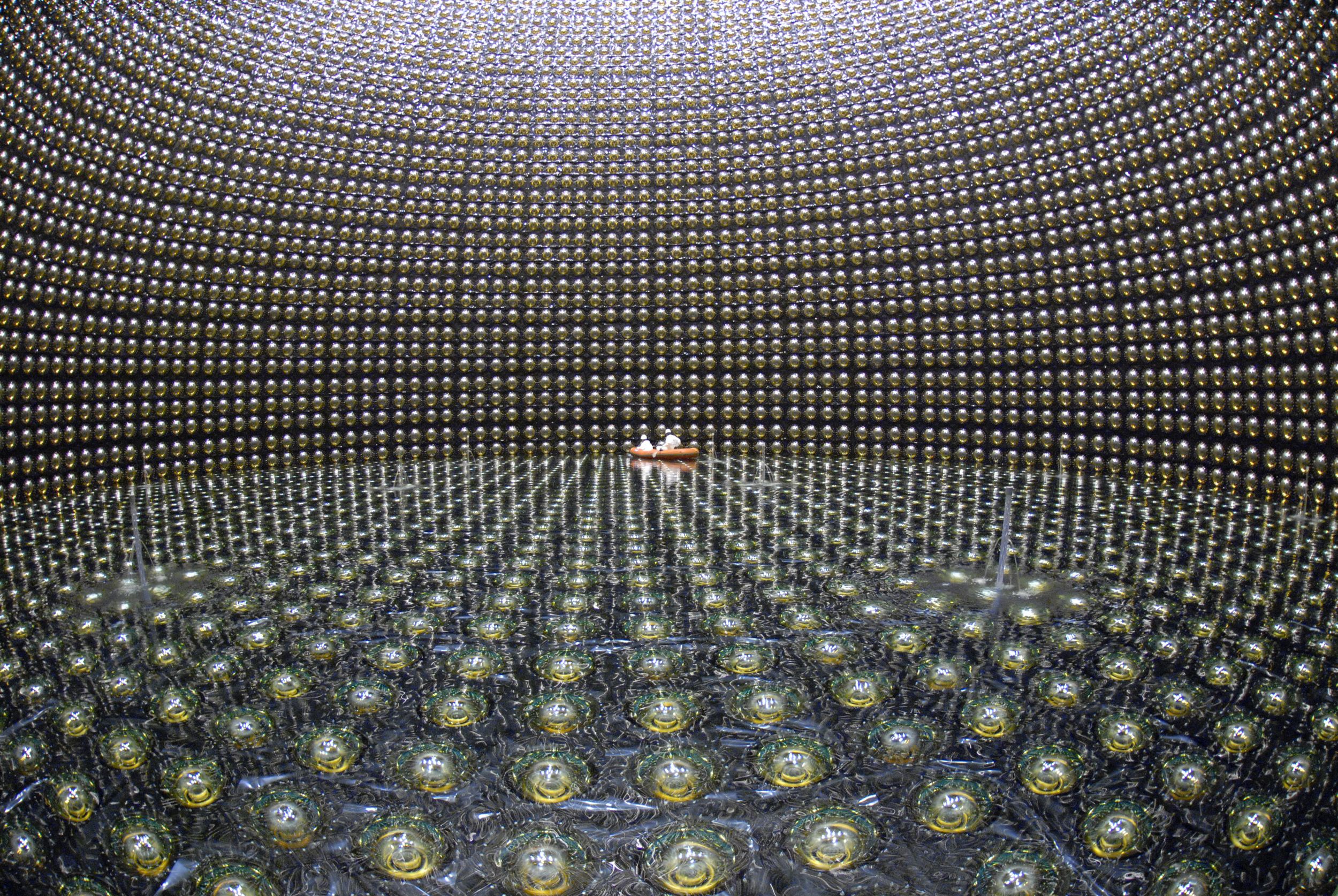
One of the most famous neutrino traps is the Super-Kamiokande detector in Japan, which consists of a large tank filled with water located deep underground. When a neutrino collides with a water molecule, it produces a flash of light that can be detected by the sensitive photodetectors surrounding the tank.
Another type of neutrino trap is the IceCube detector located at the South Pole. This experiment uses a cubic kilometer of ice to capture neutrinos that interact with the ice molecules, producing a telltale signal that can be detected by the sensors embedded in the ice.
Other experimental traps for neutrinos include the Borexino detector in Italy, the Daya Bay reactor neutrino experiment in China, and the KamLAND detector in Japan. Each of these experiments is designed to study different aspects of neutrino physics and provide valuable insights into the mysterious world of these ghostly particles.
By analyzing the data collected from these experimental traps, scientists have been able to make groundbreaking discoveries about neutrinos, such as their oscillation behavior and their role in the process of supernova explosions. These findings have revolutionized our understanding of particle physics and the fundamental forces that govern the universe.
Despite their elusive nature, neutrinos hold the key to unlocking many mysteries of the cosmos. Through innovative experimental traps and sophisticated detection techniques, scientists are getting closer to unraveling the secrets of these ghostly particles and their profound impact on the universe.